The principles
The zero rating of construction costs for new house building is intended as a tax incentive to encourage housebuilders, both professional and DIY, to bring as many new houses to market as possible. Houses when sold don’t attract VAT and any taxes paid for their procurement will be reclaimed by the developer to help keep costs low. However, any improvements made to existing houses including extensions and refurbishments do not have the same incentives and VAT must be charged and paid by the homeowner to their supply chain (builders and merchants) for this work.
The thorny issue of conversions, however, falls between the two and becomes more complicated but, on qualifying conversions, you should be able to recover VAT paid to your supply chain much in the same way as a new house. HMRC has produced a VAT refund scheme whereby DIY house builders, i.e. ordinary folks undertaking new builds or qualifying conversions, can claim (most of) their VAT expenditure back at the end of the contract in a once-only claim. Very specific rules have to be followed and the correct forms used, all of which are readily available from the HMRC website. See below.
Qualifying conversions eligible for reclamation
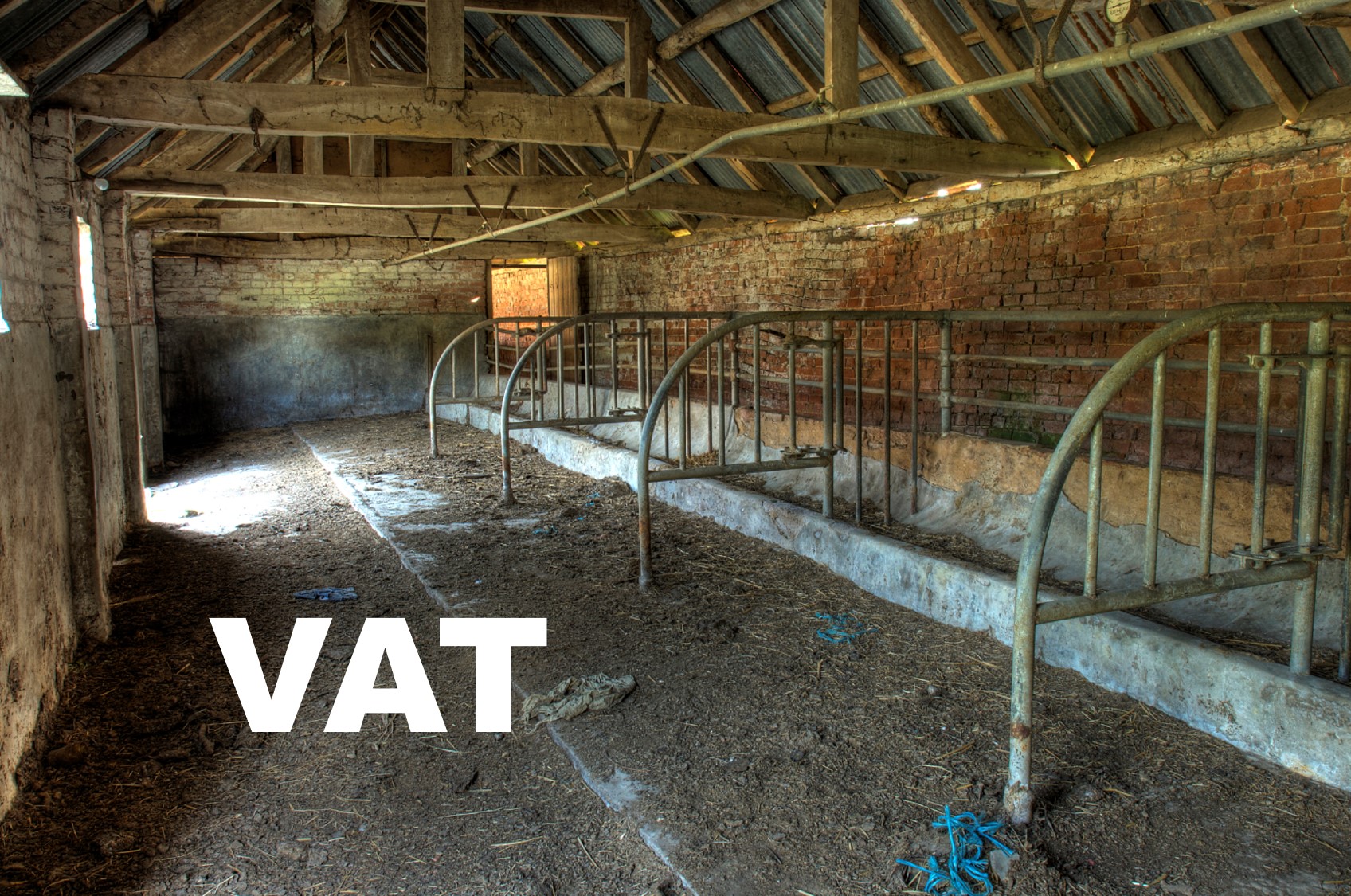
Essentially, to qualify as a conversion there must be a change of building status from one former non-residential planning class to a dwelling (planning class C3); i.e. an agricultural barn, a shop, a restaurant, a church, a school or an office as obvious examples. These types of conversions will always involve detailed planning permission or alternative consent under more temporary measures like the current permitted development for offices to dwellings.
However, if the former building status included some element of residential space, i.e. where people were known to live, then those parts of the building would not qualify as a conversion for reclamation purposes. Examples of buildings in this category would include a pub/restaurant/hotel, where there is staff accommodation upstairs, houses of multiple occupancy, student accommodation or bedsits; but, although they don’t qualify for VAT reclamation, they can qualify for concessionary VAT as set out below in the next section.
An annexe in one’s garden or the conversion of a residential garage does not qualify for VAT reclamation even where planning consent may have been necessary, unless that consent formally separates the unit into a separate dwelling, with a split title and which is capable of being sold independently from the main house. Otherwise, improvement and conversion works to these units are lumped together in the same category as extensions and subject to standard rated VAT.
The only time where a house restoration (conversion) into a useable house will be eligible for VAT reclamation is where the former house has not been lived in for a minimum period of 10 years. Strict proof is required with the principle being that an unoccupied dwelling for over 10 years is likely to be a wreck, may well have lost its habitable status, and can be deemed a conversion (for VAT purposes) ‘back into a dwelling’. And where there may be a garage involved, one must also be able to prove that the garage has not stored a vehicle for that minimum 10 year duration.
Concessionary VAT rate reductions
There are concessionary (reduced) VAT rates for conversions which enable (require) VAT registered builders to be able to invoice you for their work at 5% VAT instead of the standard 20%. This includes all of the eligible conversion types listed above (barns, shops, schools, churches, offices) as well as other dwelling conversions where there is going to be a net change to the number of units involved. So, where a large single house is being converted into four flats, builders can charge VAT at 5%. Quite illogically, the same applies where four flats are being converted back into one house. But where four flats may become six flats, only the affected areas of the conversion can apply at the concessionary rate; so, if the two extra flats were created by way of a new extension, then the extension works could be at 5% VAT but the refurbishment of the original four units would be at the standard rate.
So, the first principle is that where you are employing VAT-registered-builders to carry out qualifying building work on any type of conversion (barn to house or single house to four flats) your builders must invoice you at 5% VAT. This applies to their labour and to any materials which they have included in their supply and fix services to you. They will still pay 20% VAT to their suppliers for the materials they buy but you must not allow them to charge 20% on their supply and fix invoices to you. Any material which you buy from merchants on a supply only basis will always be charged at 20% as merchants are not allowed to apply a reduced rate on any of their supply-only sales, regardless of who the customer is or the intended project type.
The second principle is that you can only reclaim VAT paid (both standard rate to merchants and concessionary rates to builders) on qualifying eligible properties as detailed in the section above. So, in summary, all conversion works have concessionary VAT from builders but only some eligible conversion types can lead to a successful reclamation of VAT.
Legislation & VAT Notice 708: buildings and construction
The VAT legislation is the Value Added Tax Act 1994, with many subsequent amendments, and is usefully explained in the HMRC VAT Notice 708 which is their published guidance. It’s aimed at builders and suppliers so that they can manage their obligations correctly but it’s also useful for you as customers so that you can understand the law.
Section 7 covers the VAT rules as they should apply to conversions but, this document does not then deal with the reclamation process under the DIY scheme, which is a separate matter (and document) altogether and of no interest to the builders. So, in section 7 you will be able to check if your project is a qualifying conversion (7.1-7.2) and with some more specific criteria explained by category (7.3-7.5). In 7.6 there is a useful listing of the services which apply for the concessionary rate and confirmation is section 11.2 that materials can also be invoiced at the concessionary rate where they are being installed.
All folks undertaking a conversion project should familiarise themselves with this guidance as you will need to ensure that your builders understand and accept your project’s definition and status and then agree to invoice you at the correct rate.
VAT431C VAT refunds for DIY housebuilders – notes for conversions
So, on the basis that you are being correctly charged by suppliers at the standard rate of VAT, and by VAT-registered-builders at the concessionary rate for both ‘fix and supply & fix’, if you have an eligible conversion project (barn, office, church, shop….) then you can prepare to recover your VAT at the end of the project using the appropriate HMRC forms.
For conversions, as distinct from new build, you must use the VAT431C forms. There are declarations about your project to be made and then listings for the invoices for which you must attach the originals. Larger invoices must have your name and address on there and so you may need to insist on improved paperwork from suppliers when purchasing your materials. It is all very tedious and if you leave it to the end of the project you may well have to go back to suppliers to recover your paperwork, so the best thing is to be diligent with your administration from the start.
There are 16 pages of notes at the end of the form which provide guidance in a sort of FAQ style with tips and scenarios. It’s generally quite clearly set out and covers the principles discussed above. You must make your application within 3 months of completing the project and you are only able to do this once. HMRC aim to acknowledge your application within five working days and then manage your claim with six weeks thereafter, unless more information is required. The actual refund will then follow on from a successful claim from their National Payment Centre.
Incorrectly charged VAT
Section 2 of the HMRC notes (page 3) states an important note and its worth reiterating it here. It is your responsibility as the client to ensure that you pay the correct VAT to your builders in the first place. This is vital with conversions because of the reduced concessionary rate. If your builders incorrectly invoice you at the standard rate of 20% VAT for their fix-only or supply-&-fix services, you cannot claim this incorrectly charged VAT back. Instead, your only line of recourse is to get the builder to reinvoice you at the correct rate and to refund you the VAT difference. If this extra administration puts you beyond the 3-month deadline for your reclamation then you will lose the opportunity to include any of their invoices in your claim application. So, the golden rule with conversions is to make sure you pay the correct VAT in the first place.
VAT Reclamation Checklist
- If your building is a former dwelling left empty for over 10-years then you must provide evidence of this; electoral roll data, council tax data, utility company information, Empty Property Officers form the local authority, possibly sworn affidavits, etc…
- Your detailed planning consent will be required to confirm that the project is a qualifying conversion; make sure that the project descriptions are quite clearly stated.
- Confirmation that all of the work has now been completed and on what date; i.e. a building control completion certificate or qualifying evidence that you have moved in.
- Copies of your building plans and elevations must be attached.
- Top copy original invoices with your name and the project address
- This is a hard copy postal application only and cannot be undertaken digitally or submitted by disc.
- Use their helpline 0300 200 3700 for any further questions
Written and published in June 2017